A phone is enough for a quick record of the condition of a flat, but for a sale or rental listing professional photos make a much better first impression: a wide-angle lens without distortion, straight lines, balanced light between the windows and the interior, and expert editing.
A listing competes with dozens of others on the same portal, and a buyer or guest decides whether to click in a few seconds, looking only at the first photo. Below is an honest comparison - when a phone is perfectly fine and when a photographer pays off.
What a professional photographer does differently
- A wide-angle lens without distortion. The room looks spacious but realistic. A phone's ultra-wide camera (0.5x) bends the edges and the furniture, so the space looks unnatural.
- Straight verticals. Walls, doors and wardrobes are upright. In phone photos the walls often lean inwards.
- Window light and interior in balance. A phone usually picks one: either the windows are white or the room is dark. In a professional photo you see both the view through the window and the details of the room.
- Additional lighting when conditions call for it (flambient technique). In especially challenging spaces an off-camera flash reduces glare on floors and gives better colours, without the yellow and blue patches caused by different bulbs.
- Composition and order. The shots are taken from a height and angle that show the layout of the rooms, and the photos are arranged so that they lead the viewer through the property.
- Expert editing. Colour, light and perspective are corrected in every photo, in a format suited to property portals, Airbnb and Booking.com.
- Add-ons. Drone footage, video and virtual tours, which a phone cannot do, or not at the same quality.
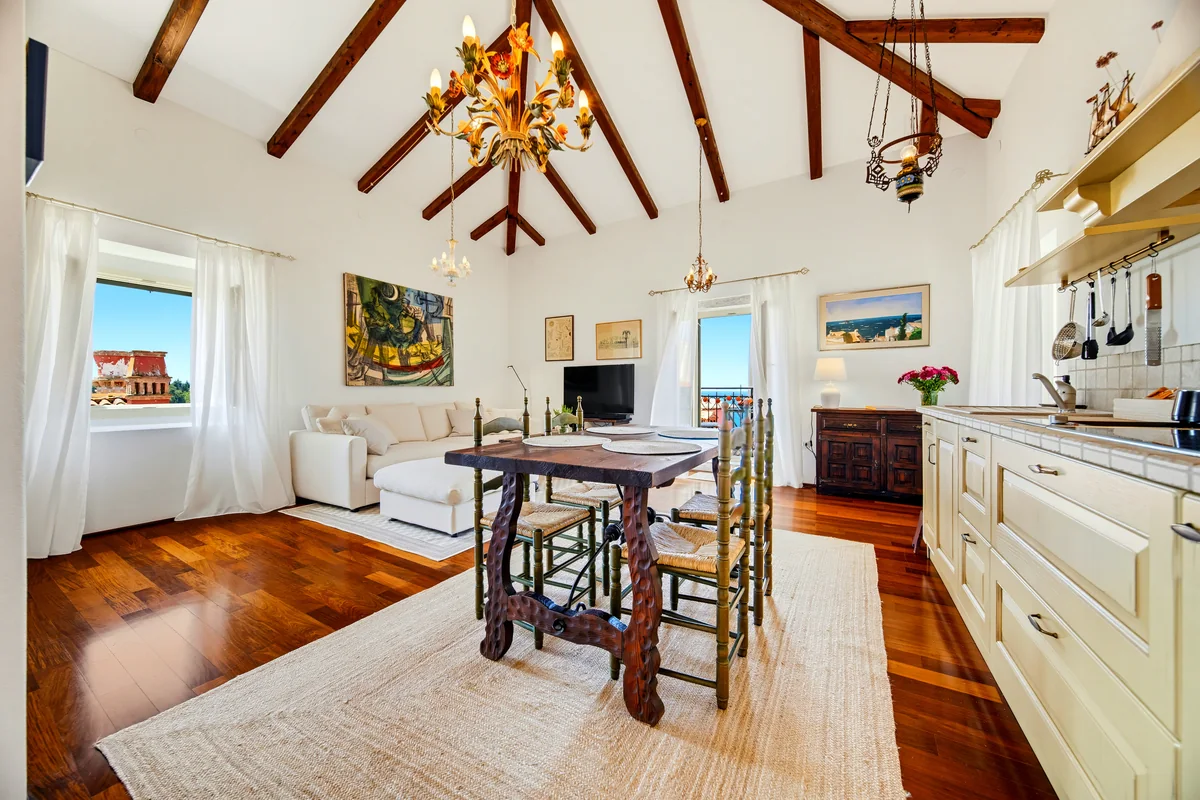 HDR
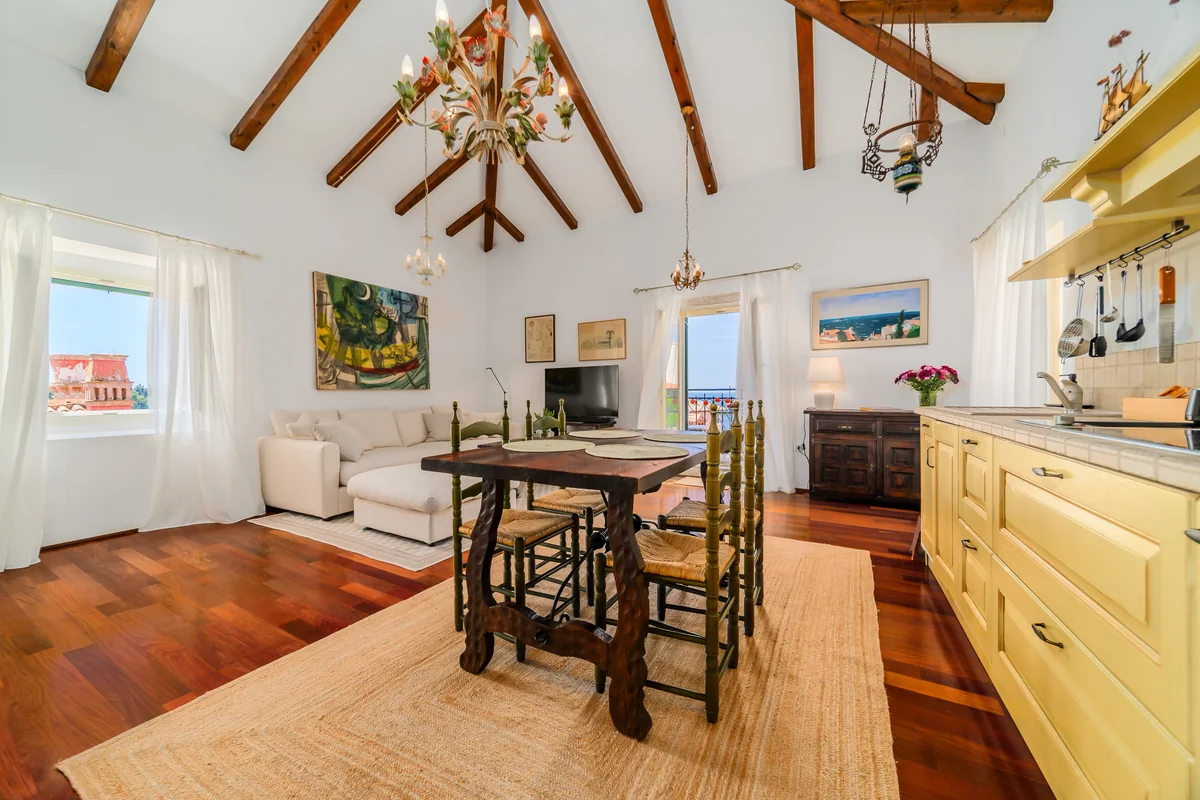 Flambient
Phone or professional photographer - comparison
| Phone | Professional photographer | |
|---|---|---|
| Lens | Ultra-wide angle with distorted edges | Wide-angle lens without distortion |
| Windows and light | Windows blown out or the room dark | Both the view outside and the interior are visible |
| Verticals | Walls often slanted | Straight lines |
| Colours | Depend on the bulbs, often yellow or blue | Realistic colours with additional lighting |
| Editing | Automatic or none | Every photo edited by hand |
| Number of photos | As many as you manage | At least 25 edited photos |
| Drone, video, virtual tour | No | Yes, on request |
| Price | €0 + your time | €200 for a holiday rental or flat |
When a phone is perfectly enough
- Photos of the condition of a flat before a tenant moves in or out.
- Quick photos for your own records or to send to a tradesman.
- An Instagram story or a quick teaser that the property is coming to the market soon.
- An internal overview for an agent before agreeing on a sale.
When a professional photographer pays off the most
- Holiday rentals (Airbnb, Booking.com). A guest chooses accommodation almost entirely by the photos, and you use the same photos for years - including for commission-free direct bookings.
- Selling a property. Better photos mean more enquiries and more serious buyers, who come to the viewing already interested.
- Larger and more expensive properties. Houses, villas and higher-end flats, where the buyer expects a quality presentation.
- Houses with grounds or a view. Drone shots show the position, the grounds and the surroundings that cannot be seen from the ground (see do you need a permit to film a property with a drone).
- Agencies. Consistent, high-quality photos give all your listings a recognisable, professional look.
If you do shoot with a phone - a photographer's tips
On the portals I see three mistakes most often: the photos are too dark, there is too much clutter in the room, and they are taken from above, with the phone tilted downwards, in an attempt to fit more of the room into a lens that is not wide enough. The walls then lean inwards. If you decide to take the photos yourself, these tips will help you avoid those mistakes and get the most out of your phone.
Preparation
- Prepare the home using the checklist for preparing your home for photos - that is half the job.
- Wipe the phone's lens. A greasy fingerprint gives blurry, "foggy" photos.
- Shoot during the day, in sunny or lightly overcast weather, when the most light comes into the home.
Light
- Open all the curtains and blinds and switch on every light in the room.
- Turn HDR on (on most phones it is automatic) and turn the flash off.
- Do not point the phone straight at a window. Stand so that the window is to the side or behind you.
- If the photo is too dark or too bright, tap the wall on the screen and drag the exposure slider up or down.
Framing
- Shoot horizontally (landscape). Property portals and Airbnb display photos in landscape (more in the guide horizontal or vertical photos and video).
- Hold the phone at chest height and perfectly level - do not tilt it up or down, or the walls will lean.
- Turn on the grid in the camera settings and line up the vertical lines of walls and doors with it.
- Stand in a corner of the room and aim the phone at the opposite corner, so that two walls and the layout are visible.
- Use the ultra-wide angle (0.5x) only in small rooms, and do not place furniture at the very edge of the frame.
- Do not zoom. If you need a closer shot, move closer.
After the shoot
- Throw out similar and weaker photos. 15 good ones are better than 40 average ones.
- In a photo editor, brighten the photo slightly and straighten any tilt, but do not use filters.
- Make the first photo in the listing the most attractive room, usually the living room or the view.
- Arrange the photos in the order a guest or buyer would walk through the home.
For everything else - get in touch
If you want your property to look like it belongs in a magazine, if you need drone footage, video or a virtual tour, or if you simply do not have time for all this - leave it to me. You get the photos within 24 hours.
Send an enquiry on WhatsApp See pricingIf you already have a listing, check it here: free listing photo review.
Frequently asked questions
Can I photograph a property with my phone?
You can, and for photos of the condition of a flat or a quick post a phone is enough. For a sale or holiday rental listing, professional photos show the space, light and layout better, so the listing gets more attention.
How much does professional real estate photography cost in Zagreb?
Photographing a holiday rental or flat costs €200 and includes at least 25 edited photos. Photographing a house with a drone shoot costs €300. The price depends on the size of the property and any extras.
How many photos does a property listing need?
For a complete presentation of a flat or house, at least 15 photos are recommended, covering all the rooms, the outdoor space and details. The holiday rental and flat package gives you 25 or more photos.
What is the flambient technique?
Flambient blends photos taken with natural light and photos taken with additional lighting. I use it in especially challenging conditions, when glare on floors needs to be reduced and better colours achieved. In standard conditions I shoot in HDR.
When do I get the finished photos?
You get the edited photos via a download link within 24 hours of the shoot.

Real estate photographer from Zagreb, Croatia, and owner of Luminus Visual Studio. He has been in photography for 15 years and photographs holiday rentals, flats, houses and small hotels for agencies, hosts and owners; he also shoots video, virtual tours and, as a licensed pilot, drone footage. Instagram: @dp.visual