Property photos for Booking.com, Airbnb and listing portals are shot horizontally (landscape), while video for Instagram Reels and TikTok is shot vertically (portrait). If you need both formats, the safest way is to shoot horizontally and wider than usual, with vertical frame guides on the screen, and then cut the vertical version from the same footage. Shooting vertical only makes sense when it is certain that a horizontal version will not be needed.
Apartment owners and agencies rarely think about this in advance - usually I am the one who raises it when we plan the shoot. A short explanation of what each format means and where it is used normally follows, and it is not unusual for a client to change their mind after the first decision and switch formats before the shoot. That is why I explain everything here in one place - and why I usually suggest the solution that keeps both formats open.
What do horizontal and vertical mean?
Horizontal means lying on its side: the frame is wider than it is tall, like a TV screen or a phone turned sideways. Vertical means upright: the frame is taller than it is wide, like a phone held in your hand. The same two formats are also called landscape and portrait.
16:9
9:16
Aspect ratios - what 3:2, 16:9, 4:5 and 9:16 mean
The aspect ratio tells you how wide the frame is compared with its height. The first number is the width, the second the height: 16:9 is a horizontal frame, and 9:16 is the same frame turned vertically.
| Ratio | Shape | Where it is used |
|---|---|---|
| 3:2 | Horizontal | Standard photo straight from a camera - Booking.com, Airbnb, property portals |
| 4:3 | Horizontal | Phone photos, some classified ad sites |
| 16:9 | Horizontal | Video on a website, YouTube, TV and presentations |
| 1:1 | Square | Older Instagram posts and social media ads |
| 4:5 and 3:4 | Vertical | Photos in Instagram posts and on the profile |
| 9:16 | Vertical | Instagram Reels and Stories, TikTok, YouTube Shorts, Facebook Reels |
Recommended formats: Booking.com, Airbnb, Instagram and TikTok
| Platform | Recommended format | What to watch out for |
|---|---|---|
| Booking.com | Horizontal photos, JPG, at least 1280 x 900 px | The gallery and the cover thumbnail are displayed in landscape. A vertical photo loses space or gets cropped, and a higher resolution looks better on large screens. |
| Airbnb | Horizontal 3:2 photos, at least 1024 x 683 px | Airbnb shows all photos horizontally in search results and itself recommends the landscape format. |
| Reels and Stories 9:16 (1080 x 1920 px), photos 4:5 (1080 x 1350 px) or 3:4 (1080 x 1440 px) | On the profile, posts are shown as vertical 3:4 rectangles, so the important part of the photo and of the Reel cover should be in the middle. | |
| TikTok | Vertical 9:16 video, 1080 x 1920 px | Keep text and important details away from the bottom and right edges, because the caption and the app's buttons cover them. |
| Property portals and agency websites | Horizontal photos and video | Listings are displayed in landscape, as on Booking.com. |
| YouTube | Horizontal 16:9 video | For longer video walkthroughs of a property. Short vertical video goes out as Shorts. |
Website: phone or computer?
On most websites today more than half of the visits come from phones, so the logical conclusion would be - everything vertical. But the more important question is how much those visitors matter to your business and which of them actually send an enquiry or book. In your website statistics, look at which devices the enquiries and bookings come from, not just the visits.
The most common solution is a combination: horizontal photos and video for computers, and a vertical version of the hero video for phones. A website can automatically show the right version depending on the device.
Horizontal used to be the rule, now it is both
Professional shooting favoured the horizontal format for a long time. Cameras, tripods and gimbals were built for a wide frame, and vertical video was a sign of footage shot on a phone. Today, with extra gear - an L-bracket, a camera cage or a gimbal with a vertical mode - a professional camera shoots vertically without any problem, in full quality. For vertical video I mount a Sony full-frame camera sideways in a cage on the gimbal, and I also use a monopod and a CPL filter that cuts reflections on floors. Some drones, like the DJI Mavic 4 Pro I fly, can also rotate the camera and capture a true vertical frame from the air.
When both formats are needed, the Mavic 4 Pro has one more advantage: it records 6K video, the highest resolution in DJI's Mini, Air and Mavic series, and it has a large 4/3 sensor. A vertical crop from 6K video is about 1900 x 3384 pixels, roughly three times more than Reels and TikTok ask for, while a crop from 4K video leaves only slightly more than that. The large sensor gives a cleaner image with more detail, so even a cropped shot of a house, garden or pool stays sharp. Aerial photos are 100 MP, so even a vertical crop for Instagram has more than 50 MP. More on this in the guide vertical or horizontal drone filming (in Croatian).
You can crop vertical out of horizontal - but not the other way round
A vertical 9:16 video can be cut from a horizontal 16:9 one. Getting a good horizontal video from a vertical one is hard, because the left and right sides of the room were never recorded. On a computer such a video stays a narrow strip with black or blurred edges.
When a horizontal frame is cropped to vertical, only a narrow part of it remains - about a third of the width, usually the middle. Around two thirds of the frame is lost. This is how it looks on a real photo:
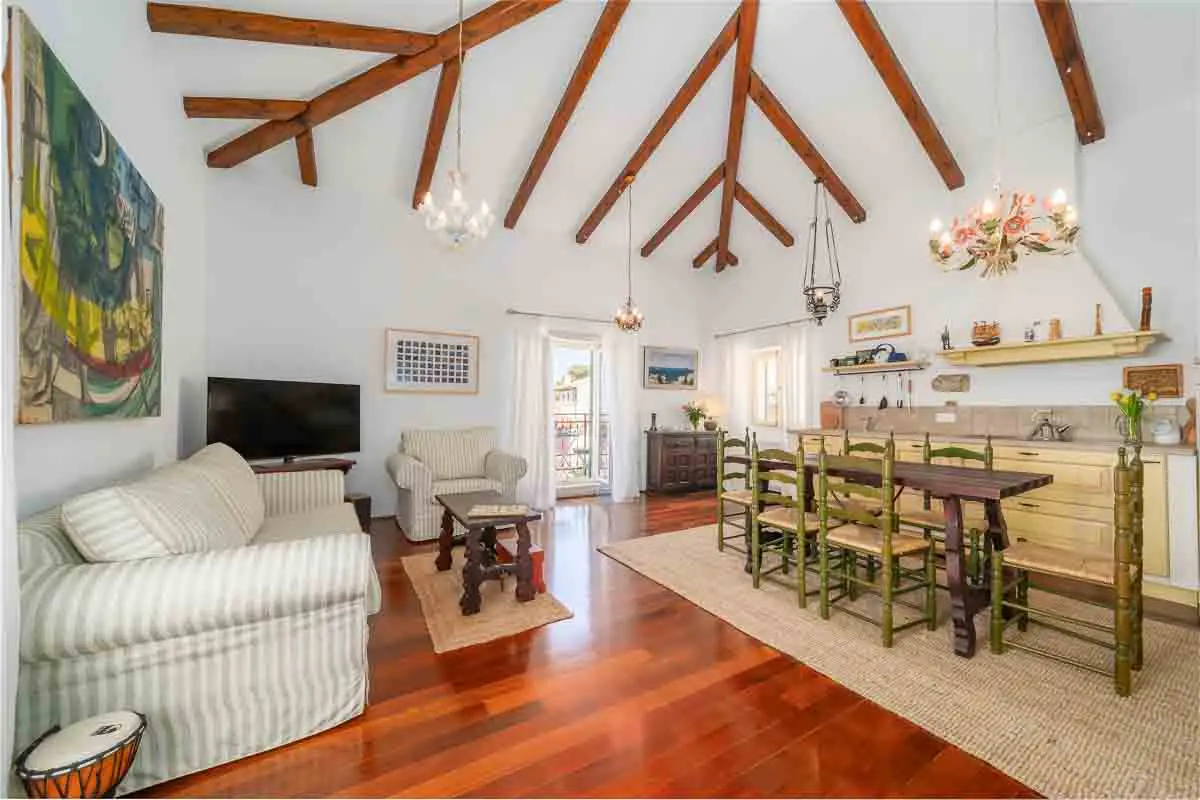 16:9 original16:9 - shifted crop
The crop can be moved left or right, but only a third of the room ever fits into the vertical version. If the shot was not framed with that in mind, the living room is reduced to the chandelier and the window, while the sofa and dining table disappear.
The safe solution: shoot wider, with vertical frame guides
When you need both formats, the safest way is to shoot horizontally, but frame everything wider than usual so there is enough room for the crop. Extra vertical frame guides are switched on on the camera screen, so throughout the shoot I can see what will end up in the vertical version and keep the important parts of the room inside the guides.
- One shoot, two formats.
- The horizontal version stays in full quality, for the website, YouTube and the listing.
- The vertical version for Reels and TikTok is edited from the same footage, shorter and at a faster pace.
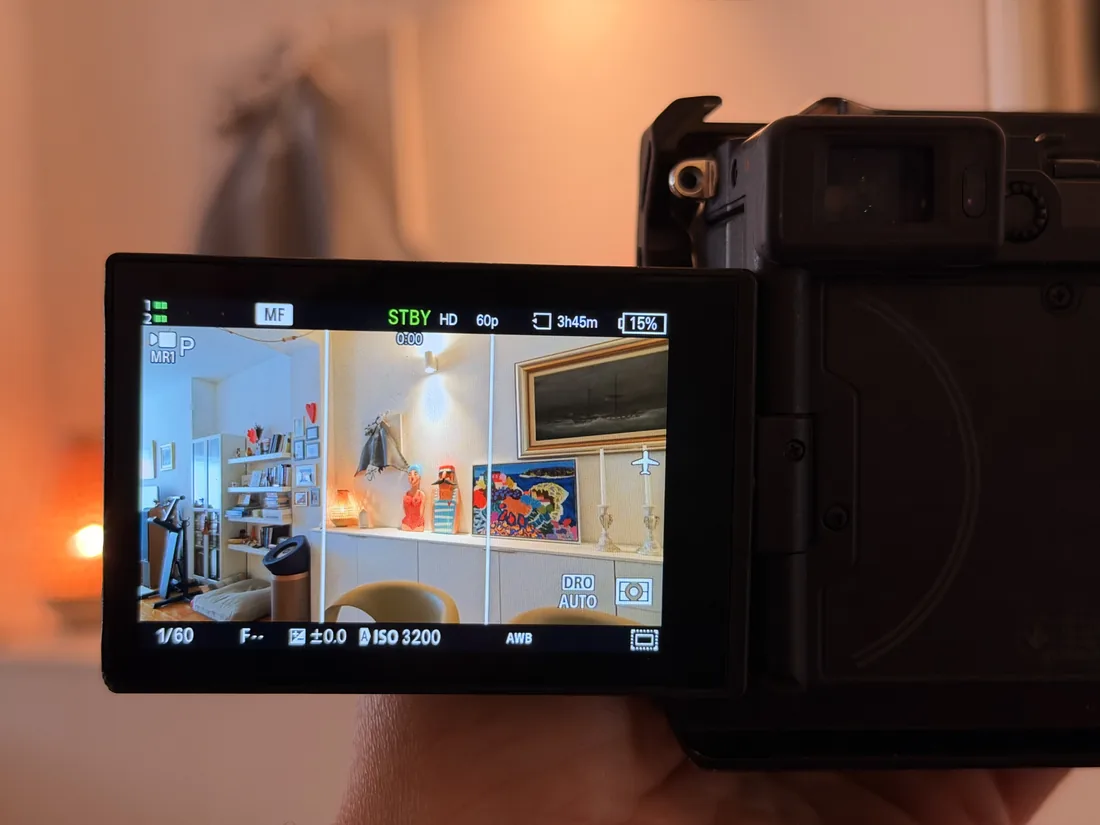
Shooting vertical only makes sense when you are completely sure that a horizontal version will not be needed - for example a short Reel announcing free dates or a new offer. In that case a vertical frame gives full quality and the best composition for phones.
Apartment photography: horizontal, plus a few vertical shots
I photograph holiday rentals and flats horizontally, because that is what Booking.com, Airbnb and the portals use. For an Instagram post a horizontal photo can be cropped to 4:5, but almost half of the width is lost. So it is better to agree on a few dedicated vertical photos in advance:
- Narrow spaces - a bathroom, hallway or staircase looks more natural in a vertical frame.
- Tall spaces - a mezzanine, high ceilings, wooden beams.
- Details - decor, the kitchen, bedding, a welcome touch for guests.
- The view - a terrace or balcony with a view, as a shot for Stories.
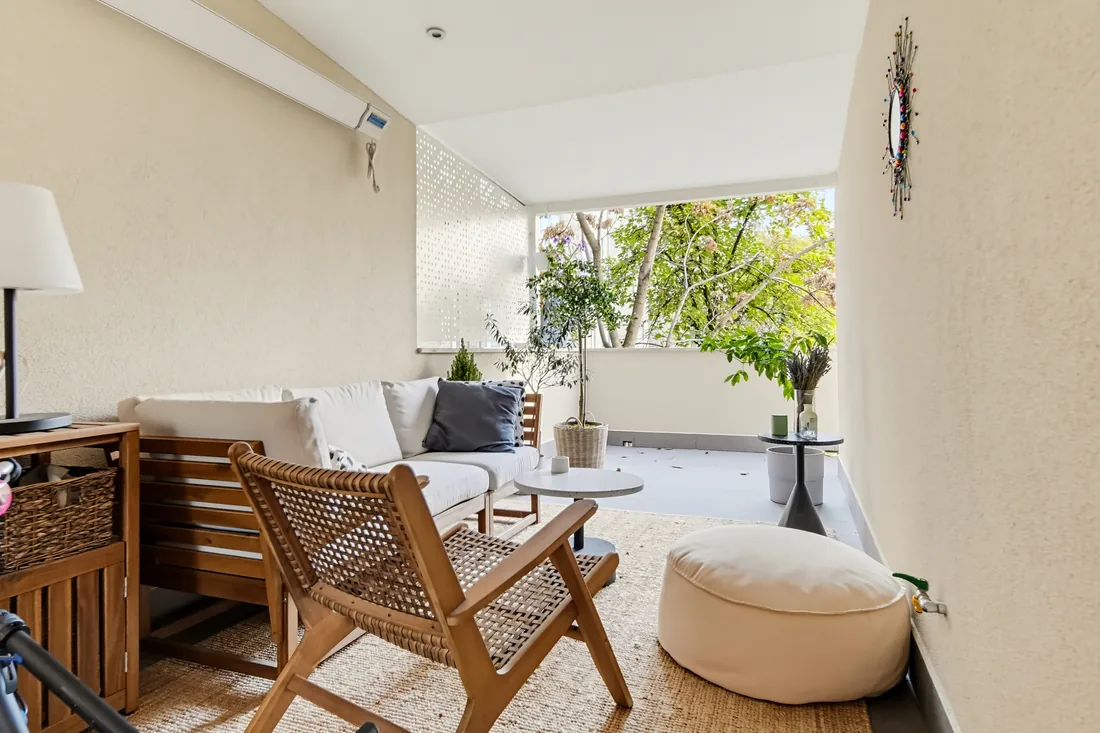 Horizontal
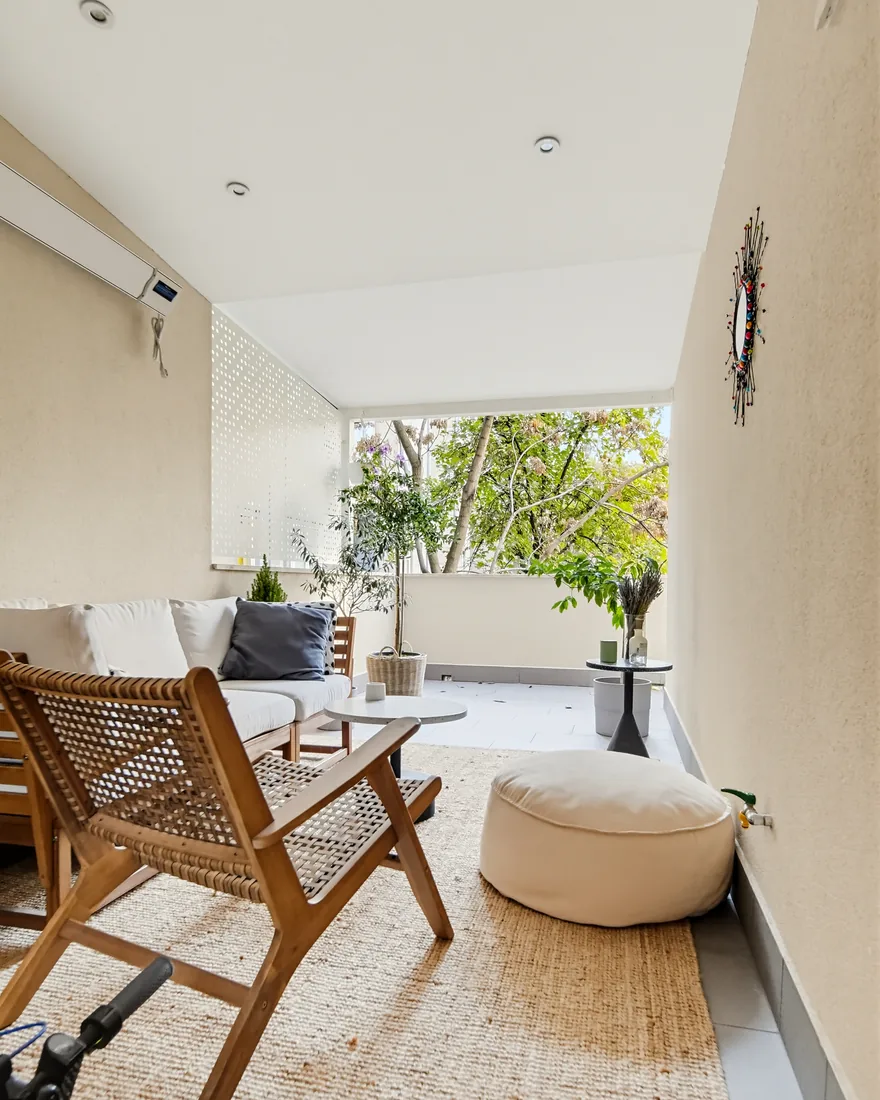 Vertical
What to agree with the photographer before the shoot
Tick what you have already decided. You can also print the checklist.
Not sure which format you need?
Tell me where you will use the photos and video, and we agree on the formats before the shoot. That way one session gives you material for the listing, the website and social media.
Send an enquiry on WhatsApp See pricingIf you already have a listing, check it here: free listing photo review.
Frequently asked questions
Should apartment photos for Booking.com be horizontal?
Yes. Booking.com and Airbnb display photos in landscape, so horizontal photos fill the gallery and the cover thumbnail best. Keep vertical photos for Instagram.
Can a vertical video for Reels be made from a horizontal one?
Yes. A vertical 9:16 video is cut from a horizontal 16:9 one, but only the middle of the frame remains, about a third of the width. That is why the shots are framed wider, with vertical frame guides on the camera screen.
Can a vertical video be turned into a horizontal one?
Not really. A vertical frame is missing the left and right sides of the room, so the horizontal version has black or blurred edges or is heavily zoomed in. If there is any chance that a horizontal version will be needed, shoot horizontally.
What is the aspect ratio for Instagram Reels and TikTok?
9:16, vertical across the whole phone screen. Photos in Instagram posts use a 4:5 or 3:4 ratio.

Real estate photographer from Zagreb, Croatia, and owner of Luminus Visual Studio. He has been in photography for 15 years and photographs holiday rentals, flats, houses and small hotels for agencies, hosts and owners; he also shoots video, virtual tours and, as a licensed pilot, drone footage. Instagram: @dp.visual